Prompting is a professional skill because it determines how effectively people can direct, evaluate, and apply outputs from Generative AI in real work. Strong prompting improves decision quality, reduces errors, and turns AI from a novelty into a reliable thinking and productivity tool for knowledge workers.
Prompting is no longer a technical curiosity. It’s becoming a core workplace capability.
As Large Language Models like ChatGPT become embedded in everyday tools, the ability to clearly frame problems, provide context, and evaluate outputs determines whether AI saves time or creates more work. Professionals who develop this skill gain leverage, clarity, and confidence in how they use AI at work.
Prompting is not about tricks or magic phrases.
It’s about thinking clearly and communicating intent.
Prompt engineering for non-technical users
Answer: Prompt engineering for non-technical users focuses on clarity, structure, and intent rather than code or model mechanics. It teaches professionals how to explain goals, constraints, and context in plain language so AI systems can produce useful, reliable outputs without technical expertise.
Most people using AI at work are not engineers. They’re managers, consultants, analysts, marketers, and operators.
For non-technical users, effective prompt engineering means:
- Explaining what you want in everyday language
- Providing just enough context to guide the AI
- Setting boundaries to reduce errors and hallucinations
- Reviewing outputs with human judgment
You don’t need to understand how models are trained.
You do need to know how to ask for the right thing, in the right way.
This is why prompting is best taught as a professional literacy, not a technical discipline.
Prompt engineering for knowledge workers
Answer: For knowledge workers, prompt engineering is a way to improve thinking, analysis, and execution. It helps professionals use AI to clarify ideas, explore options, draft outputs, and support decision-making across writing, research, planning, and communication tasks.
Knowledge work depends on judgment, context, and synthesis.
Prompting supports this by allowing you to:
- Explore ideas before committing to action
- Pressure-test assumptions and alternatives
- Draft and refine documents faster
- Turn vague thinking into structured outputs
When done well, prompting reduces cognitive load and preserves attention for higher-value work.
For knowledge workers, the goal isn’t automation.
It’s better thinking with support.
Practical prompt engineering examples
Answer: Practical prompt engineering examples show how small changes in structure, context, and constraints can dramatically improve AI output quality. These examples focus on real workplace tasks such as summarising documents, drafting emails, analysing data, and planning next steps.
Here are a few applied examples:
Example 1: Clarifying intent
“Summarise this report” →
“Summarise this report for a senior manager, highlighting risks, decisions required, and recommended next steps.”
Example 2: Adding constraints
“Write an email to a client” →
“Write a concise, professional email to a client explaining a delay, avoiding blame and proposing a revised timeline.”
Example 3: Supporting judgment
“What should I do?” →
“List three viable options, outline trade-offs, and flag risks I should consider before deciding.”
These are not tricks.
They’re patterns you can reuse across tools and tasks.
Prompt frameworks for ChatGPT
Answer: Prompt frameworks provide a repeatable structure for interacting with ChatGPT and other Large Language Models. They help professionals consistently communicate intent, context, constraints, and desired outputs without relying on guesswork or one-off prompts.
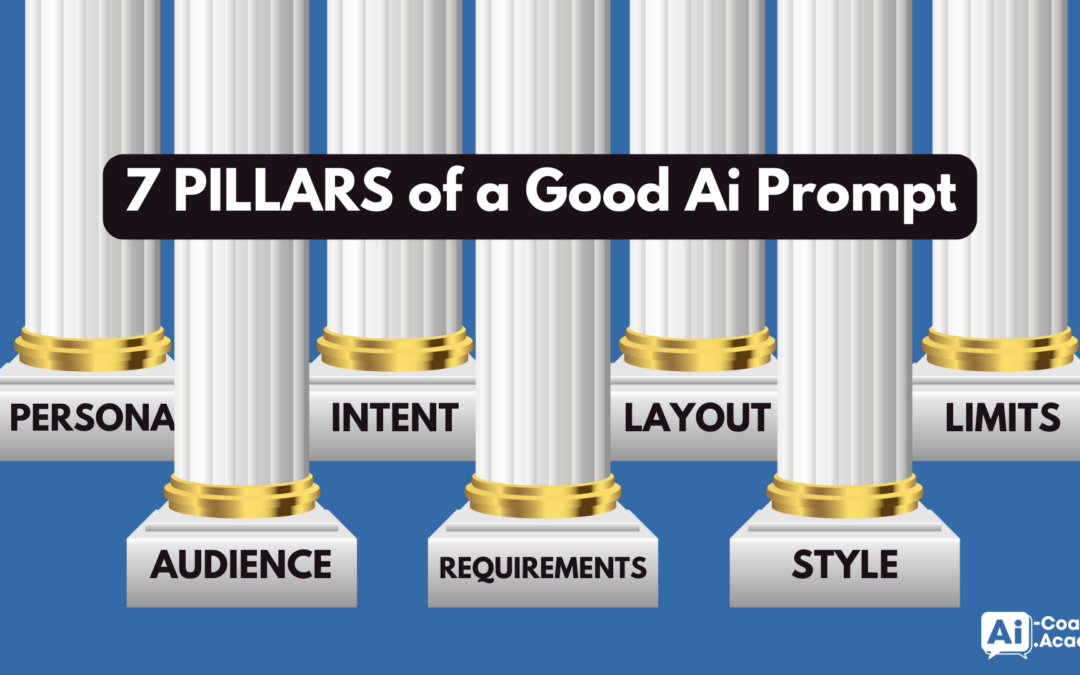
One effective framework is PILLARS:
- Persona: Who the AI should act as
- Intent: What you want to achieve
- Layout: How the output should be structured
- Limits: Constraints, exclusions, or guardrails
- Audience: Who the output is for
- Requirements: Must-have elements
- Style: Tone and voice
Using a framework improves reliability and reduces the need to “prompt endlessly” for corrections.
Frameworks turn prompting into a system, not a gamble.
How to write better prompts at work
Answer: Writing better prompts at work starts with clarity about the task, audience, and decision required. Effective prompts specify context, define success, and invite iteration rather than assuming the first output will be perfect.
To improve your prompts at work:
- Pause and define what you actually need
- State the outcome, not just the task
- Provide relevant context and constraints
- Ask for options or drafts, not final answers
- Review outputs with human judgment
Prompting improves with feedback and repetition.
Like any professional skill, confidence comes from practice with guidance, not from memorising templates.
Build this skill properly
Prompting as a professional skill is best learned through structured practice, real workflows, and feedback.
At AI Coaching Academy, prompting is taught by Founder Caelan Huntress as part of broader AI literacy—alongside ethics, decision quality, and workflow design—so it becomes a reliable capability you can use every day at work.