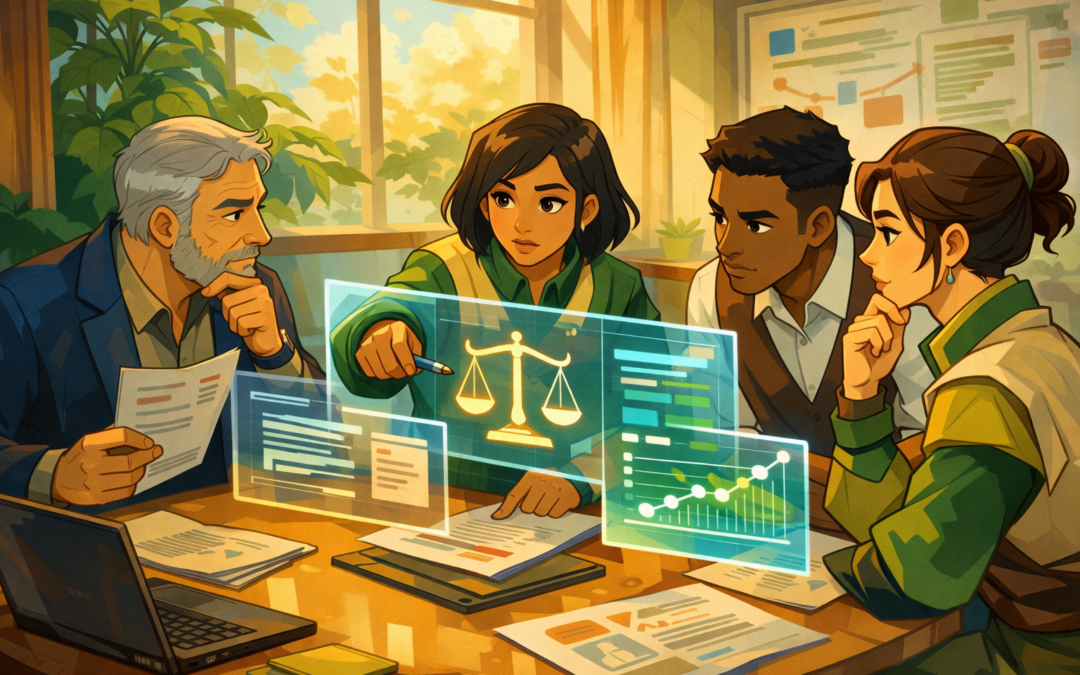
Using AI ethically isn’t optional — AI ethics is a professional responsibility. This page covers the practical ethical considerations professionals face when using AI at work.
Why AI Ethics Matters in Practice
Ethical AI use isn’t abstract philosophy. It affects:
- Trust — with clients, colleagues, and the public
- Quality — ethical shortcuts often produce worse outcomes
- Risk — legal, reputational, and operational
- Culture — how your organization relates to technology
AI ethics is practical risk management combined with professional integrity.
Core AI Ethics Principles
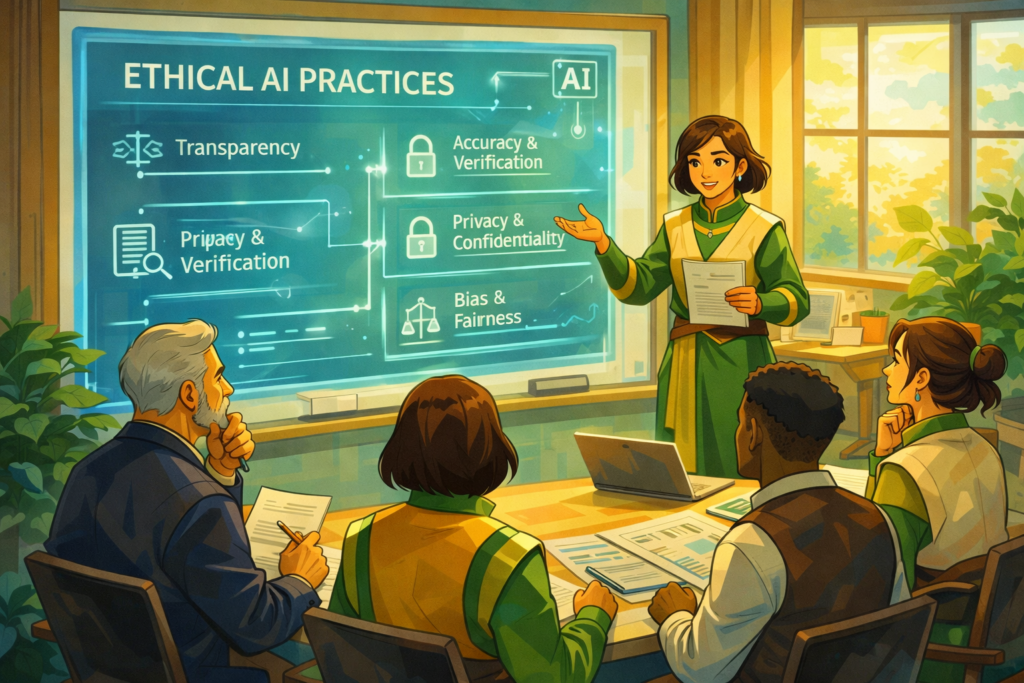
Transparency
Be clear about when and how you’re using AI.
Questions to ask:
- Do stakeholders know AI was involved in this work?
- Would they expect to be told?
- Are there disclosure requirements in your industry?
In practice:
- Disclose AI use where it affects trust or decisions
- Don’t represent AI-generated work as entirely human-created
- Be honest about the limits of AI-assisted analysis
Accuracy and Verification
AI makes things up. This is called “hallucination” and it’s a fundamental limitation.
The rule: Never trust AI outputs without verification, especially for:
- Facts, statistics, and citations
- Names, dates, and specific claims
- Legal, medical, or financial information
- Anything with significant consequences if wrong
A true AI operator evaluates every output critically.
Privacy and Confidentiality
Data you put into AI tools may be stored, used for training, or accessed by the provider.
Consider:
- Is this data confidential?
- Is the client aware it may be processed by AI?
- Does your organization have policies on AI and data?
- What are the tool’s data handling practices?
Best practice: Assume anything you enter is no longer private. Redact sensitive information before using AI tools.
Bias and Fairness
AI systems reflect biases in their training data. This affects:
- Hiring and HR applications
- Customer service responses
- Content recommendations
- Decision support systems
Your responsibility: Review AI outputs for bias, especially when they affect people. Don’t assume AI is neutral just because it’s a machine.
Attribution and Intellectual Property
AI raises complex questions about ownership and attribution:
- Who owns AI-generated content?
- When must you credit AI assistance?
- Are you using AI outputs that infringe others’ rights?
Safe practice: Check your organization’s policies, client agreements, and applicable laws. When in doubt, disclose and get guidance.
Common AI Ethics Dilemmas
“Can I submit this as my own work?”
It depends on context:
- Academic work: Usually no, unless explicitly allowed
- Professional work: Disclosure expectations vary by industry
- Creative work: Norms are still evolving
The key question: Would relevant stakeholders feel deceived?
“Should I use AI for this sensitive decision?”
AI can support but shouldn’t replace human judgment for:
- Hiring and firing decisions
- Medical or legal advice
- High-stakes client recommendations
- Situations requiring empathy and nuance
Use AI for research and analysis, but keep humans accountable for decisions.
“The AI gave me confidential information about a competitor”
If AI reveals information that seems confidential or proprietary, consider:
- How would you feel if your information appeared this way?
- Is using this information ethical or legal?
- Should you verify the source independently?
Just because AI provides information doesn’t mean you should use it.
Building Ethical Practice
Individual AI Ethics Level
- Pause before prompting — Is this appropriate to share with AI?
- Verify before using — Is this output accurate?
- Disclose when relevant — Would stakeholders want to know?
- Apply judgment — Does this feel right?
Organizational AI Ethics Level
Organizations using AI should develop:
- Clear policies on acceptable AI use
- Training on ethical AI practice
- Governance for high-risk AI applications
- Feedback channels for ethical concerns
AI training for teams includes ethical frameworks as a core component.
The Professionalism Standard
Ethical AI use comes down to professionalism:
- Would you be comfortable explaining your AI use to your boss?
- To your clients?
- To a journalist?
If yes, you’re probably on solid ground. If not, reconsider.
AI Ethics, Education, and Certification
The AI Foundations Certification includes ethical AI use as a core competency. It’s not enough to be skilled with AI — professionals must also be responsible.
Staying Current
AI ethics is evolving. Stay informed through:
- Industry guidelines and best practices
- Professional association standards
- Legal and regulatory developments
- Thoughtful community discussion
The AI Coaching Academy community regularly discusses emerging ethical questions and practical approaches.
Want to develop ethical AI practice systematically? Join the AI Coaching Academy for frameworks, discussion, and community guidance on responsible AI use.